Insights
DAIM Insight
Explore the latest trends in manufacturing and logistics innovation through expert insights.
Opening
The Robots Are Moving. Why Isn’t the Factory Improving?
We closed the previous issue with a question:
“As robot deployments grow, are factories really becoming smarter and more efficient?”
In conversations with companies exploring factory automation, a common concern emerges: “We don’t know where to start or how to proceed.” Many begin by deploying one or two robots for a proof of concept (PoC), eager to see whether the performance demonstrated at exhibitions translates to their own facilities.
Over time, however, the question changes:
“The robots are running. Why isn’t the factory improving as much as we expected?”
Decisions often focus on an individual robot’s performance or purchase price, with less attention to how many robots are needed, what roles they should serve, or how workflows across the factory should change. Once full operations begin, some workers’ workloads may ease, yet the expected productivity gains remain out of reach. This is not every company’s experience, but it is a recurring concern on the factory floor.
Why does this happen? In this issue, we examine the automation pain points most often encountered in real manufacturing environments.

Key Highlights
Three Key Barriers to Automation Success
-
Key Highlight 01
Shifting bottlenecks and limited factory-wide productivity gains from isolated automation
-
Key Highlight 02
Deadlocks, congestion, and manual intervention caused by poor coordination across heterogeneous robots
-
Key Highlight 03
Hidden costs and vendor lock-in from systems that struggle to adapt to change
Trend
DAIM Thoughts
Why Isn’t Automation Delivering the Expected Results?

Four Practical Limitations of Hardware-Centric Automation
① Local Optimization — Robots Are Deployed, but the Factory Remains Unchanged.
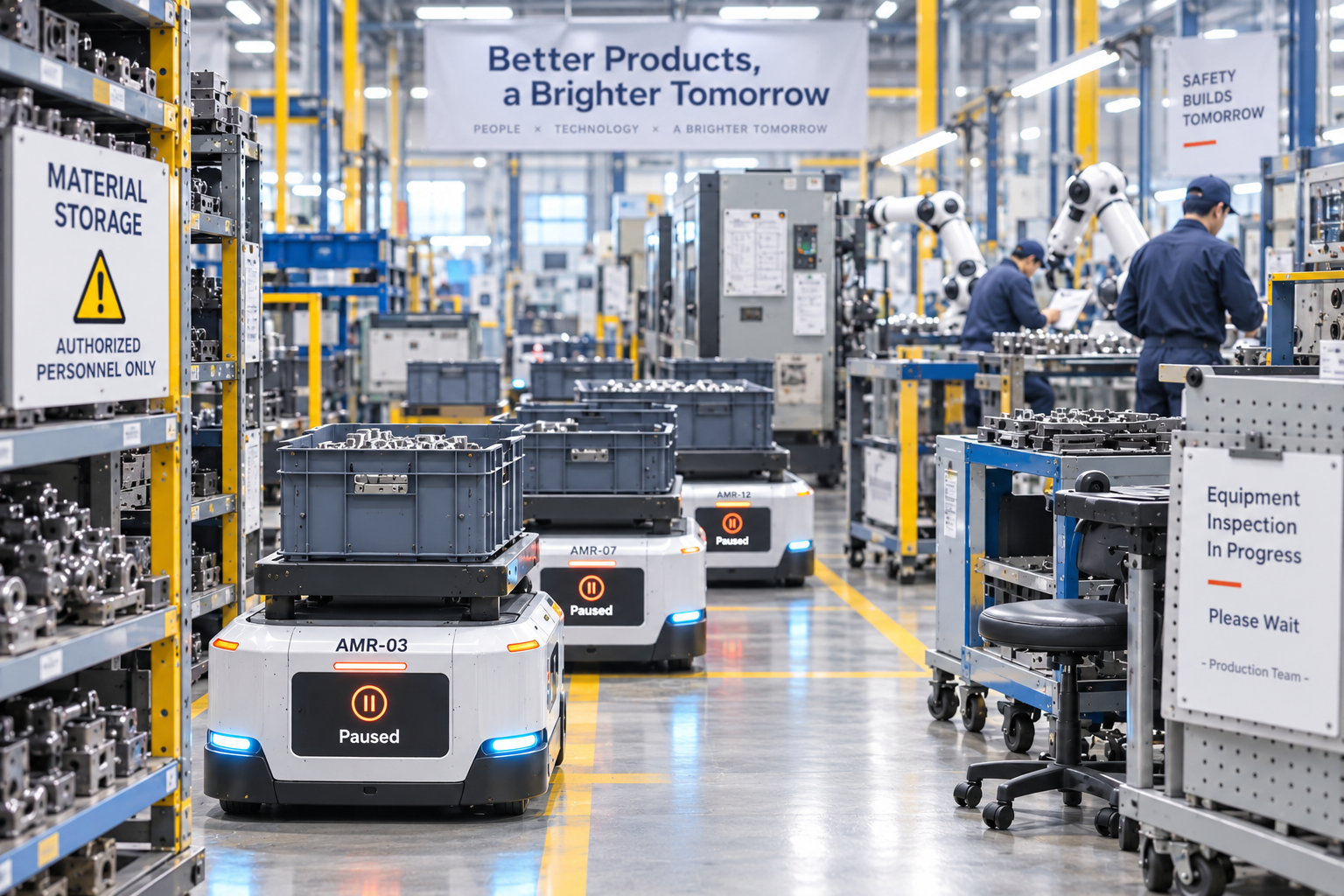
Companies beginning their logistics automation journey typically tackle the most urgent areas first. They might deploy one or two AMRs at the end of a production line to handle physically demanding tasks, or automate a specific warehouse zone. This is a reasonable starting point, and it can improve speed in that area.
But an unexpected problem often follows. The AMRs move materials faster, yet the next inspection process cannot keep up. Once inspection improves, materials begin piling up before packaging. The bottleneck has not disappeared—it has simply moved elsewhere in the factory.
Individual robots may successfully take over demanding tasks, but factory-wide productivity still falls short of expectations.
A typical example unfolds like this:
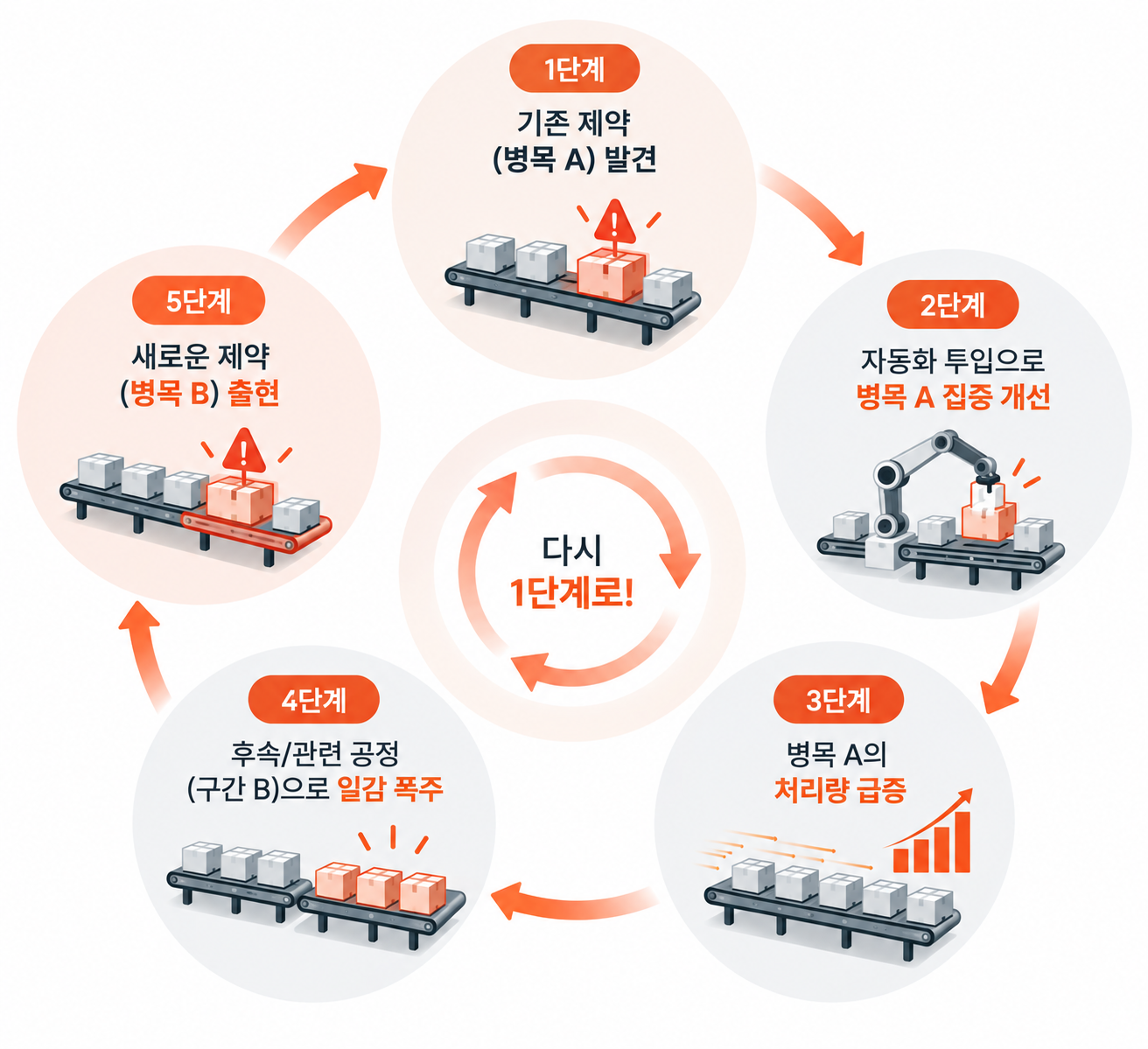
Repeated improvements can gradually increase productivity over time. But without treating the factory as one connected flow, optimizing processes individually can take far more time and money than expected.
② Deadlock — More Robots, More Blocked Routes
As operations expand and processes become more sophisticated, companies naturally deploy robots from different vendors for different tasks. A fast AMR from one vendor may share a workspace with an automated guided forklift (AGF) from another, designed to lift and stack heavy pallets.
This is where technical limitations become apparent. Robots from different manufacturers often use different communication standards and fleet control systems. Without coordination between these systems, they may be unable to interpret each other’s position or intended movements when approaching head-on.
The result can be a deadlock: two robots stop in a narrow, three-meter-wide aisle, neither yielding to the other. When the system cannot resolve the conflict in real time, workers must enter the area and manually move the robots, creating recurring operational inefficiencies.
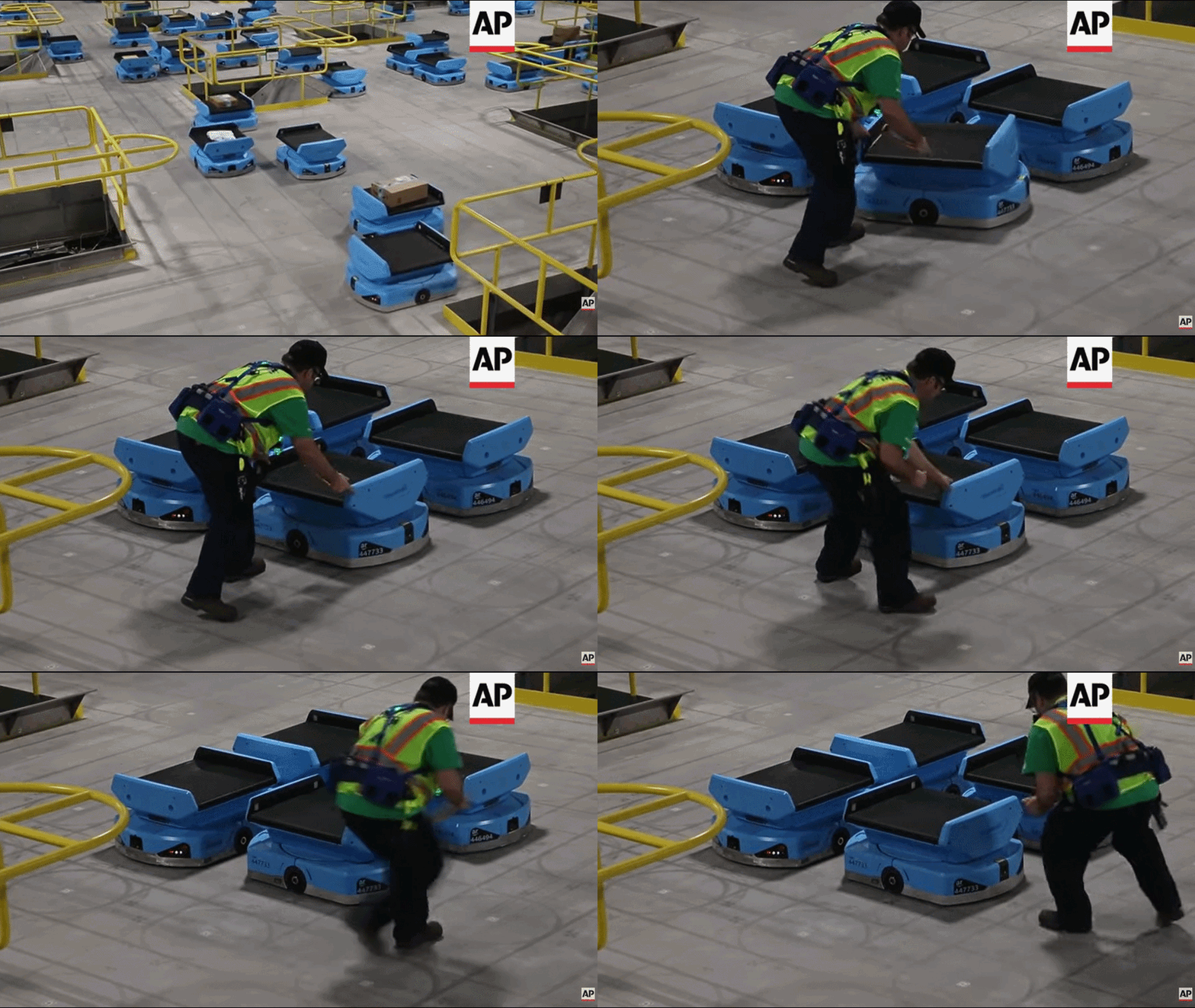
■ Why Traffic Coordination Matters as Robot Fleets Grow
[Source: AP Archive, Robots may be workers’ slog as warehouses automate]
This footage shows workers controlling robot movements and clearing congestion at an Amazon fulfillment center. When many robots operate simultaneously, conflicting routes can cause deadlocks or congestion, making integrated operations management essential.
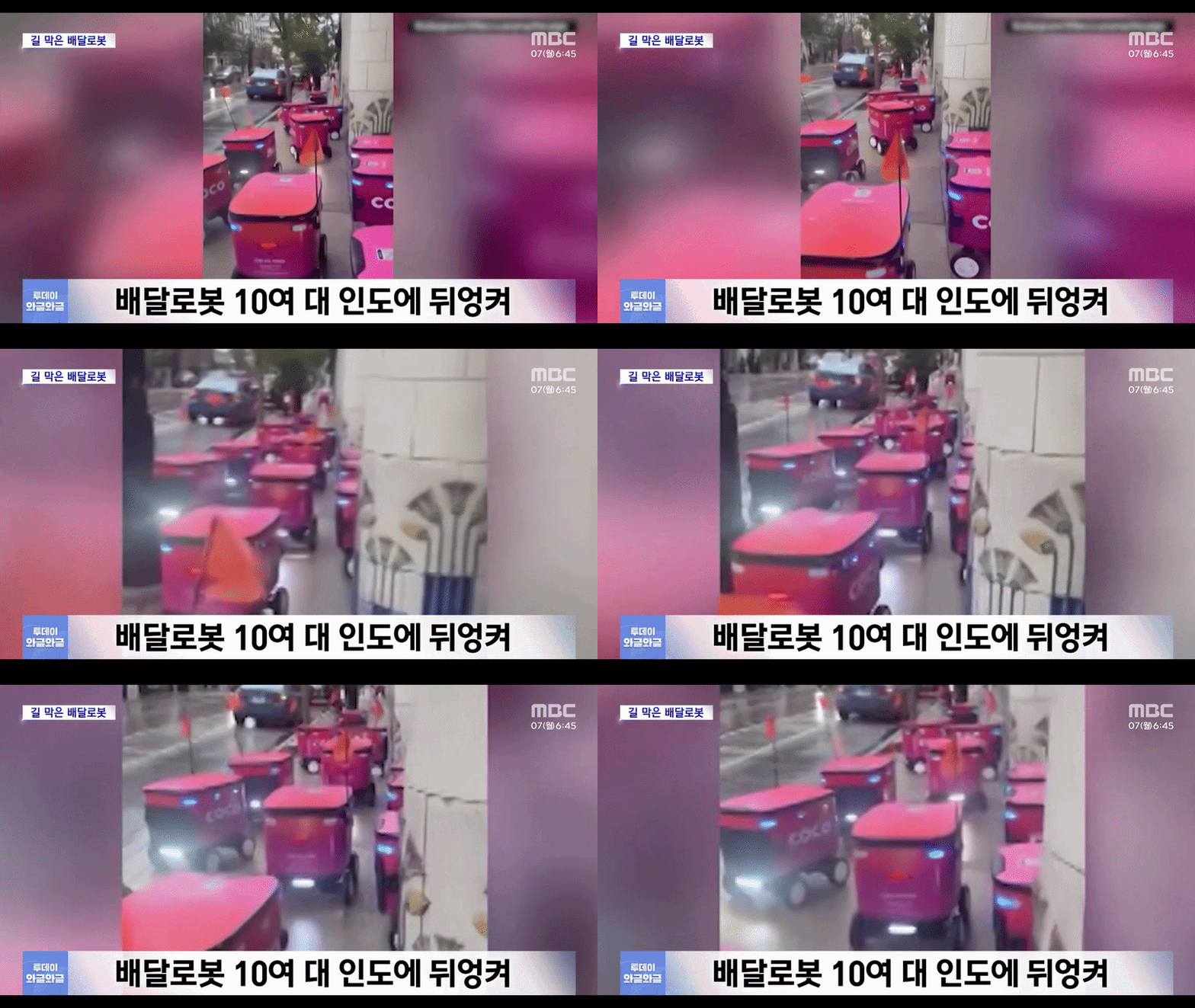
■ Why Did Autonomous Robots End Up in One Place?
[Source: MBC News Today, Over a Dozen Delivery Robots Tangled Up on a Sidewalk]
Although outside manufacturing, this incident in Chicago involved around a dozen delivery robots converging in one location due to a routing system error. It highlights the importance of systems that reliably coordinate and manage multiple robots, alongside each robot’s autonomous navigation capabilities.
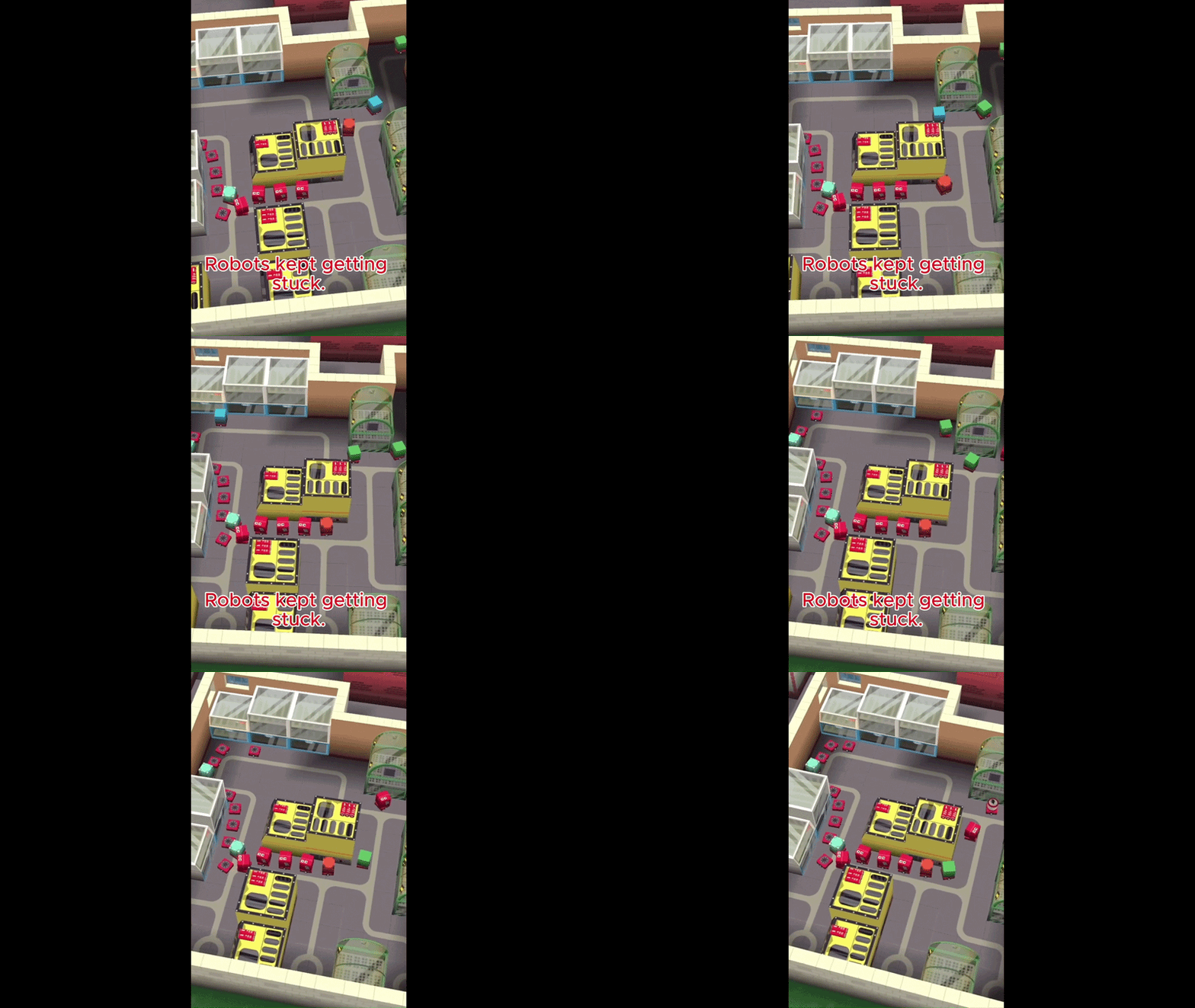
■ Why Can’t Robots Move When a Path Exists?
[Source: YouTube, Short Story Games, My Robots Created a Traffic Jam]
This simulation shows robots blocking each other’s paths until none can move. When multiple robots operate simultaneously, individual path planning alone may not prevent conflicting movements and deadlocks.
③ Hidden Costs — Unseen Expenses Keep Adding Up
Manufacturing environments change more often than expected. New products, shifts in production volume, and even minor line relocations can alter material flows. Yet many automation systems are built around the conditions at initial installation.
Even a small layout change can trigger a recurring cycle:
[Rebuild navigation maps] → [Call in engineers] → [Modify software] → [Suspend operations]
The resulting downtime and engineering fees create ongoing costs that were not factored into the initial robot purchase. Repeated reconfiguration requires additional spending, and these initially hidden costs accumulate over time.
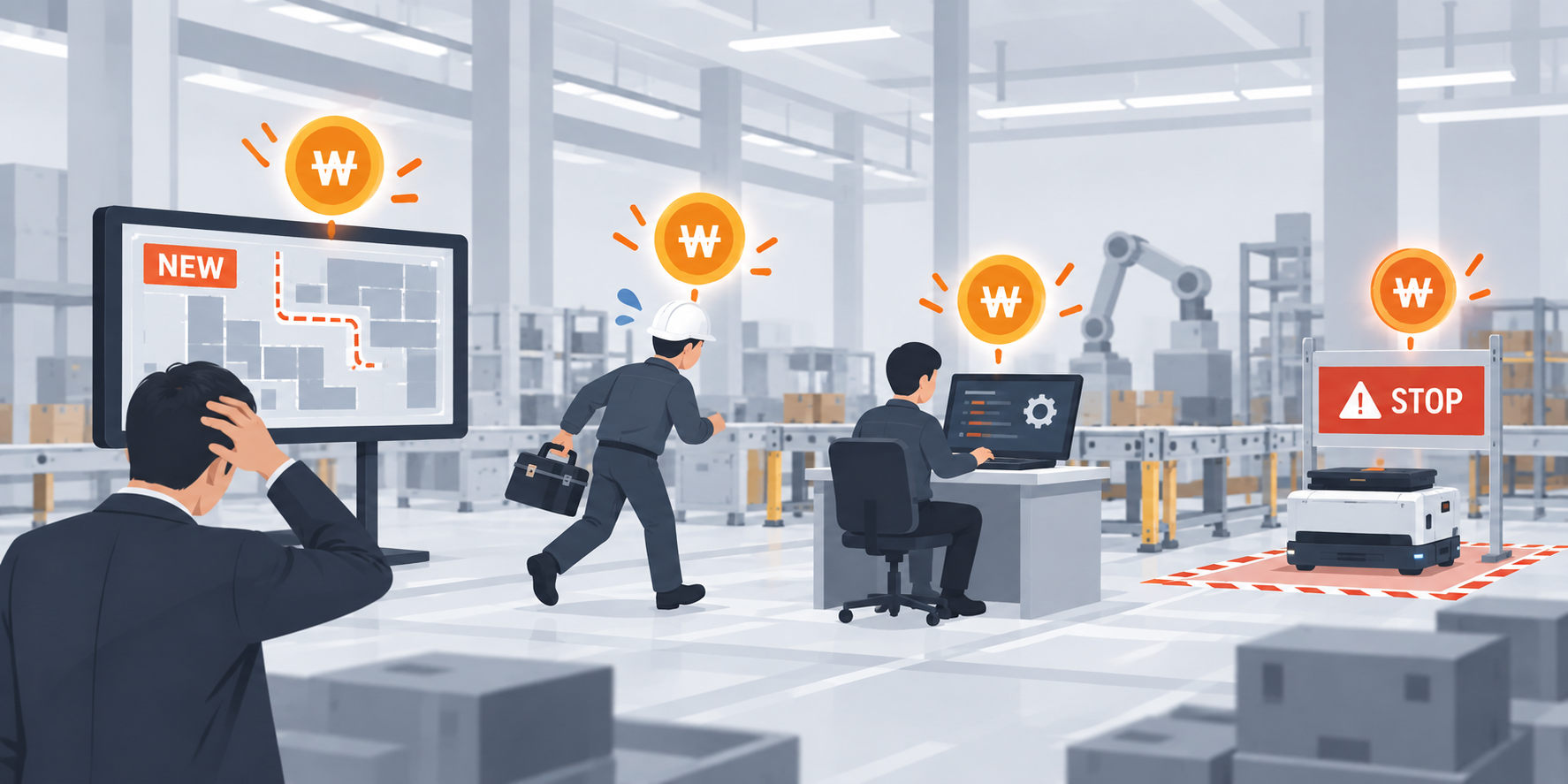
On the factory floor, this sometimes prompts a joke: “We call in engineers more often than we deploy robots.”
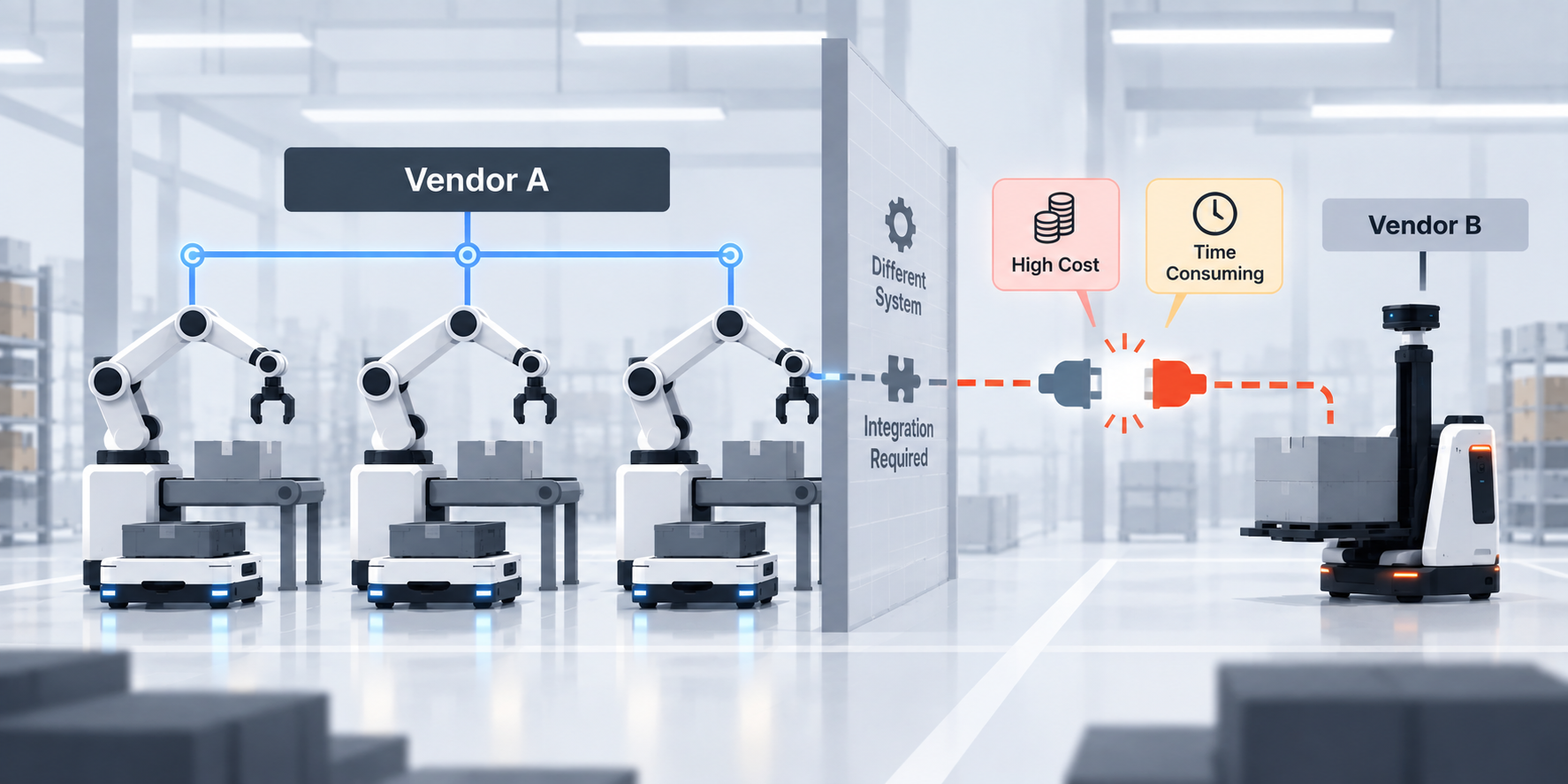
④ Vendor Lock-in — Fewer Choices Over Time
To avoid these challenges, some companies adopt a single vendor’s robots and fleet management system from the outset. The initial benefits are clear: deployment is relatively straightforward, maintenance is handled through one point of contact, and there is less need to coordinate multiple suppliers.
But factories must evolve as products become more sophisticated or requirements change. Maintaining future competitiveness also means moving toward autonomous operations that use AI and Physical AI to maximize productivity.
This may involve adding production lines or cells, or introducing another vendor’s equipment or robots better suited to new requirements.
That is where problems arise. When the existing system is built around one vendor’s technology and interfaces, integrating new robots can take far more time and money than expected. Companies may have to keep buying from the same vendor or substantially rebuild their systems. The convenience of the initial choice can ultimately limit the factory’s flexibility.
Consider an automotive parts manufacturer, Company A. It began its logistics automation project with Vendor B’s AMRs and fleet management system. Deployment went smoothly, and productivity improved to some extent. Two years later, increased production required an automated guided forklift (AGF) to transport heavy engine components. After comparing products, Company A found that Vendor C offered a better fit in both performance and price.
However, the existing fleet management system was designed around Vendor B’s equipment and could not readily integrate Vendor C’s forklift.
Company A faced two options:
① Purchase additional equipment from Vendor B
Keep the existing system, but accept equipment that falls short of the desired requirements and performance.
② Adopt Vendor C’s equipment and rebuild the fleet management system
Choose the preferred equipment, but take on the cost and effort of replacing the existing management system.
The result was additional cost and time that had not been anticipated when the automation equipment was first purchased.
Ultimately, the Challenge Was Operations.
The four limitations we explored may seem distinct, but they share a common cause.
Shifting bottlenecks, robot deadlocks, recurring reconfiguration costs, and vendor lock-in all stem from the same issue: individual robots are working, but the factory is not operating as one coordinated system.
Factory competitiveness no longer depends solely on hardware performance. Autonomous manufacturing begins when production equipment, logistics robots, and automation systems from different vendors can work together as an integrated whole.
So how do we coordinate this flow?
Manually directing dozens of robots and machines has its limits. What is needed is an operational framework that understands factory-wide workflows, makes decisions in real time, and coordinates diverse robots and equipment as one system.
This leads to a natural question:
Can robots from different vendors truly work as one team?
In the next issue, we explore how AI-powered orchestration can address these challenges.
2026.09.29DAIM Focus