

AI Simulation for Optimized Operational Planning
Through High-Speed Computation
Maximize productivity with optimal operating strategies powered by high-performance intelligent algorithms,
and enable data-driven decision-making through real-time rescheduling and quantitative analysis.
Why DAIM’s xSIM?

xSIM is a high-speed Discrete Event Simulation (DES) engine
designed to predict and optimize complex manufacturing and intralogistics systems.
Powered by DAIM Technology's proprietary optimization algorithms, xSIM rapidly evaluates tens of thousands of operational scenarios to determine the optimal robot fleet size and operating logic. When conditions change on the factory floor, it dynamically reschedules operations to maximize operational efficiency. Using quantitative simulation data—including robot utilization and other operational KPIs—xSIM objectively validates expected performance and supports data-driven logistics automation strategies.
Key Capabilities
Automation Strategies Derived from High-Speed Simulation
-
Key Capabilities
- High-Speed Simulation
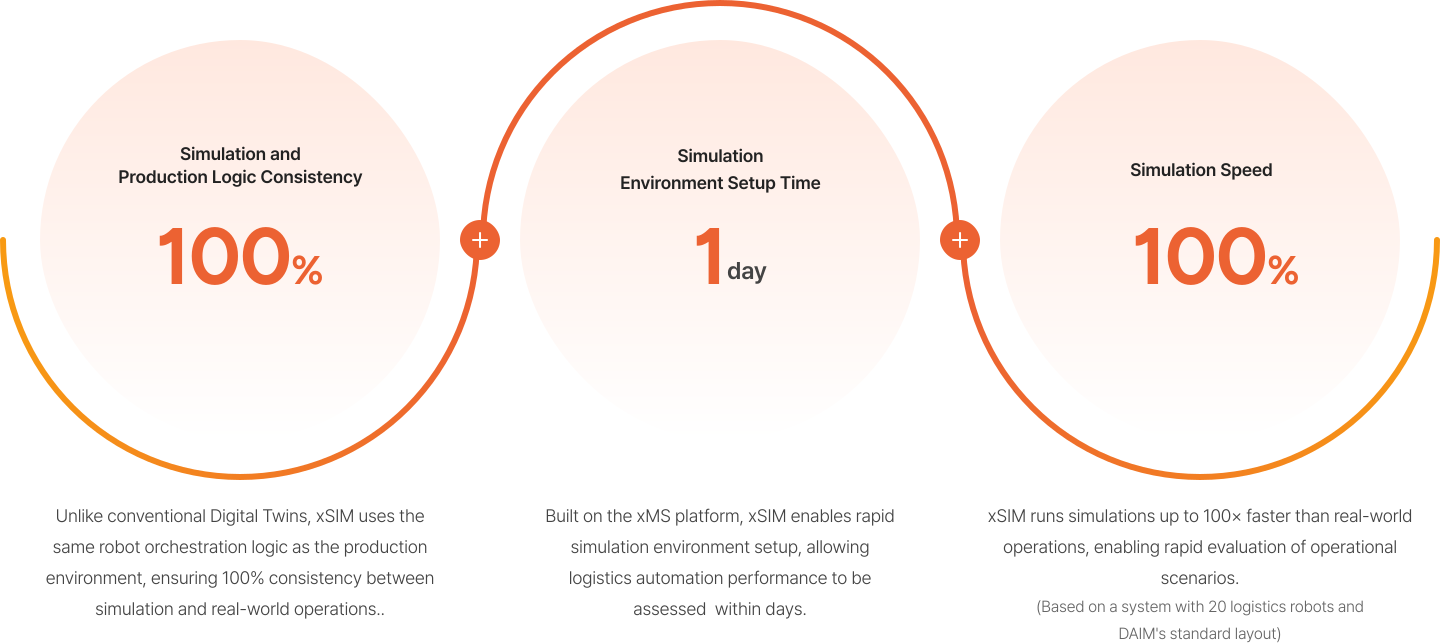
- Powered by Discrete Event Simulation (DES), xSIM simulates complex manufacturing and intralogistics systems tens to hundreds of times faster than real-world operations. By rapidly evaluating tens of thousands of scenarios, it identifies the optimal operational scenario to maximize productivity.
-
- AI-Powered Robot Orchestration
- xSIM incorporates DAIM's AI-powered robot orchestration module to manage complex logistics robot operations within a unified control framework. By analyzing robot traffic in real time, it evaluates congestion-free routing and efficient fleet operations before deployment.
-
- Tailored System Integration
- xSIM can be configured to match each customer's operational requirements and integrated with existing systems. This flexible approach enables simulation scenarios tailored to each production environment, ready for deployment.
Proven Impact
Business Value, Proven by the Numbers
Case Studies
Proven Results from Global Manufacturing Leaders


Common Challenges Across Manufacturing
-
 Challenge
When deploying large-scale AGV, AMR, or OHT systems, it is difficult to predict whether target KPIs such as throughput and lead time can be achieved. There is also insufficient data to determine the optimal robot fleet size and operating policies for each production environment.
-
 Solution
A virtual logistics automation system was built to replicate real-world physical constraints, operational logic, and system communications. The system enables virtual testing under the same conditions as the production environment across a wide range of scenarios—including material flow changes and equipment failures—to assess system stability and identify potential limitations before deployment.
-
 Results
Simulation helped avoid unnecessary investment by determining the optimal robot fleet size and specifications required to achieve target KPIs. Multiple operating policies were evaluated in advance to determine the most efficient operating strategy.
Elevator Manufacturing
-
Challenge
Elevator group control algorithms need to be validated quickly and accurately across diverse passenger traffic patterns without relying on testing in actual buildings.
-
Solution
Used a 165× accelerated simulation engine to ensure consistent and reproducible results. Designed and validated control strategies using user-defined what-if scenarios, including building layouts, elevator models, and passenger traffic patterns.
-
Results
Completed simulations of a full day's operations in just 9 minutes, dramatically reducing algorithm testing and validation time. Conducted hundreds or even thousands of simulation runs that would be impractical in real-world environments, thoroughly validating the performance and stability of new control logic.
Battery Manufacturing
-
Challenge
Limited physical access to overseas factories required remote analysis and validation of production and logistics processes from Korea to identify optimization scenarios for maximizing operational efficiency.
-
Solution
Modeled the complex operational logic and physical constraints of core production processes in a Digital Twin, and embedded the decision logic of operational systems—including MES and ACS—into the simulation engine.
-
Results
Analyzed overseas factory operations remotely from Korea in real time, validated the feasibility of remote implementation, and used high-fidelity simulations to predict the outcomes of multiple operational scenarios, increasing productivity by up to 3.8%.
How it Works
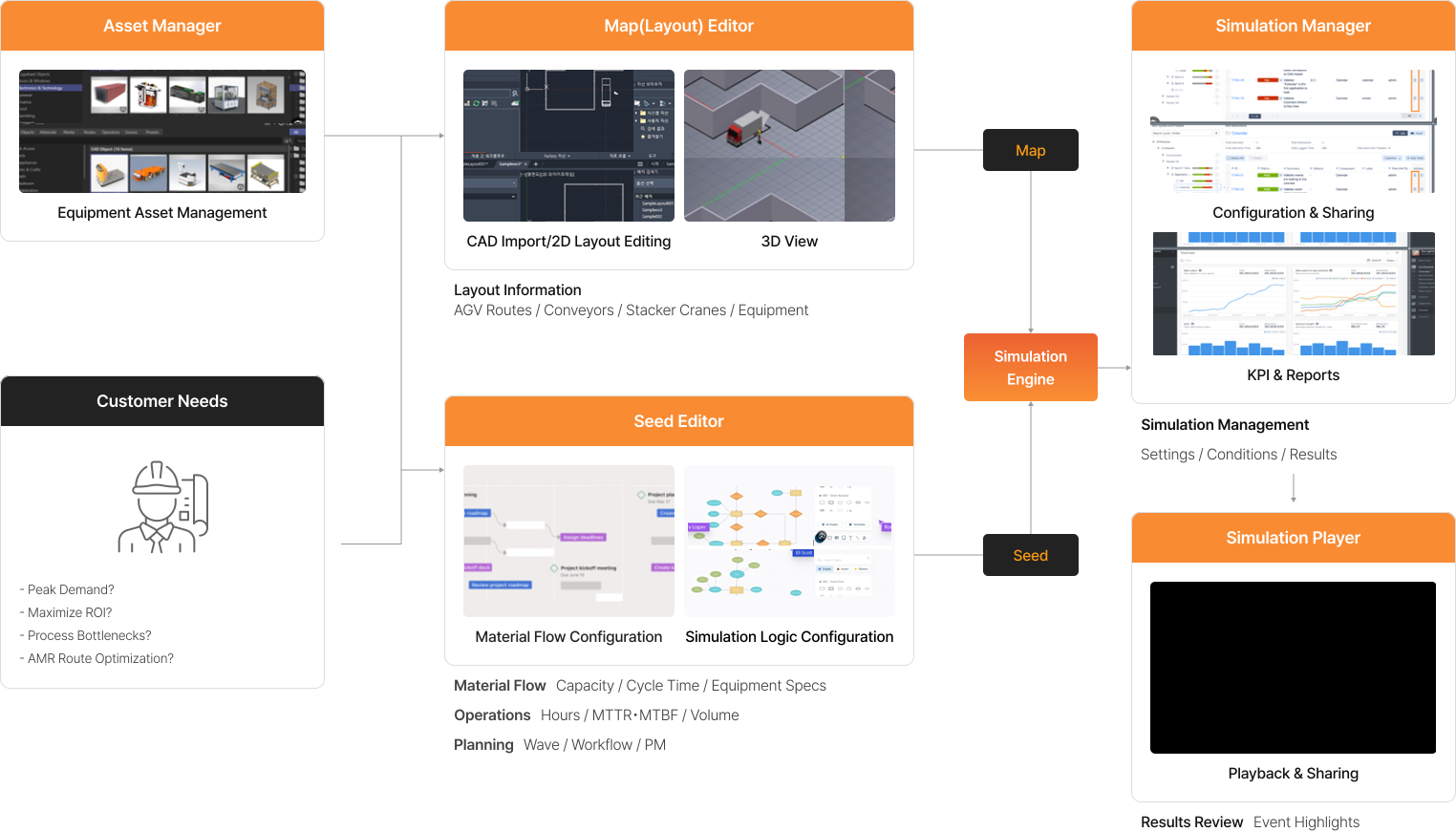
An Integrated xSIM Workflow from Design to Validation
FAQ
Key Questions to Ask Before Deployment
Yes. If the target system is outside xMS's standard scope, our simulation engineers analyze the system and build a custom simulation model using xSIM's standard modeling framework.
Yes. Manual operations can be modeled in the same way as automated equipment. To ensure accurate simulation results, task times and process definitions must be clearly defined.
Design simulation is used during system planning to evaluate ROI and investment feasibility before deployment. Operational simulation supports decision-making and continuous performance improvement using data from actual operations. If you're not sure which approach is right for your project, feel free to contact us.
