Insights
DAIM Insight
Explore the latest trends in manufacturing and logistics innovation through expert insights.
Opening
Humanoids on the Shop Floor: The Reality of Autonomous Manufacturing in Global Plants
Hello and welcome.
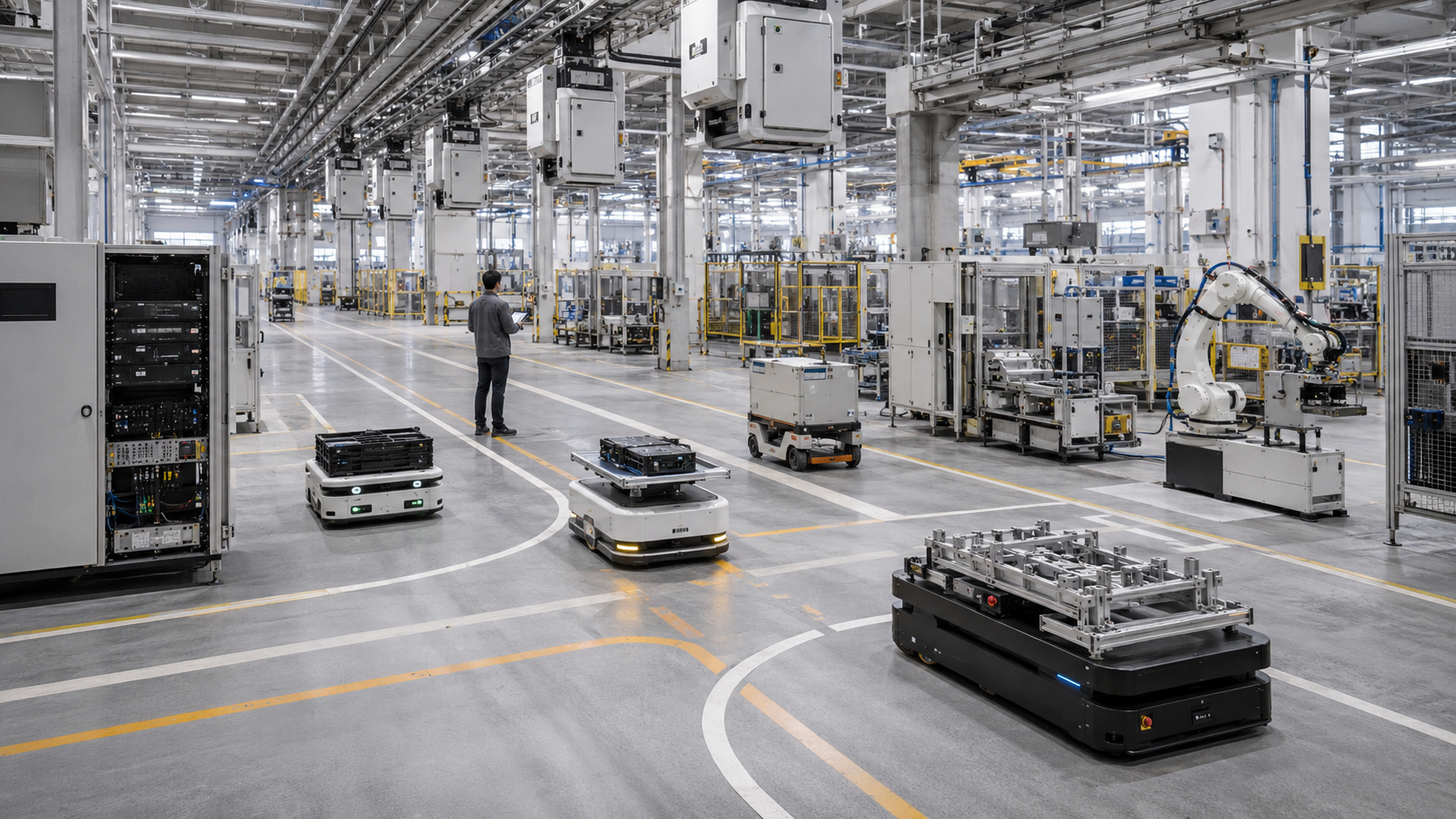
In our inaugural issue of D-Velop, CEO Young-Jae Chang outlined how Physical AI is reshaping manufacturing competitiveness on a macro level. Starting with this edition, we zoom in on the actual factory floor—exploring real-world shifts, key industry cases, and how manufacturers should prepare for what lies ahead.
To kick things off, let`s start with a thought many of us might have had on our morning commute:
"What if a robot could clock in and do my job today instead?"
While it sounds like a lighthearted daydream, global manufacturing headlines suggest this future is approaching faster than expected. Tesla’s second-generation Optimus is autonomously sorting battery cells on the plant floor, Figure AI’s Figure 02 is handling sheet metal along BMW’s assembly line, and Apptronik’s Apollo is transporting component bins in Mercedes-Benz facilities.

Key Highlights
Key Insights: From Humanoid Adoption to Logistics Bottlenecks
-
Key Highlight 01
Humanoid robots entering real-world deployment across global manufacturing leaders
-
Key Highlight 02
Focusing on pragmatic human-robot collaboration over complete unmanned automation
-
Key Highlight 03
Seamless material flow as the true driver of overall plant productivity beyond unit
Trend
DAIM Thoughts
Autonomous Manufacturing vs. Dark Factories: The Future of Humans on the Factory Floor

Global Humanoid Trends
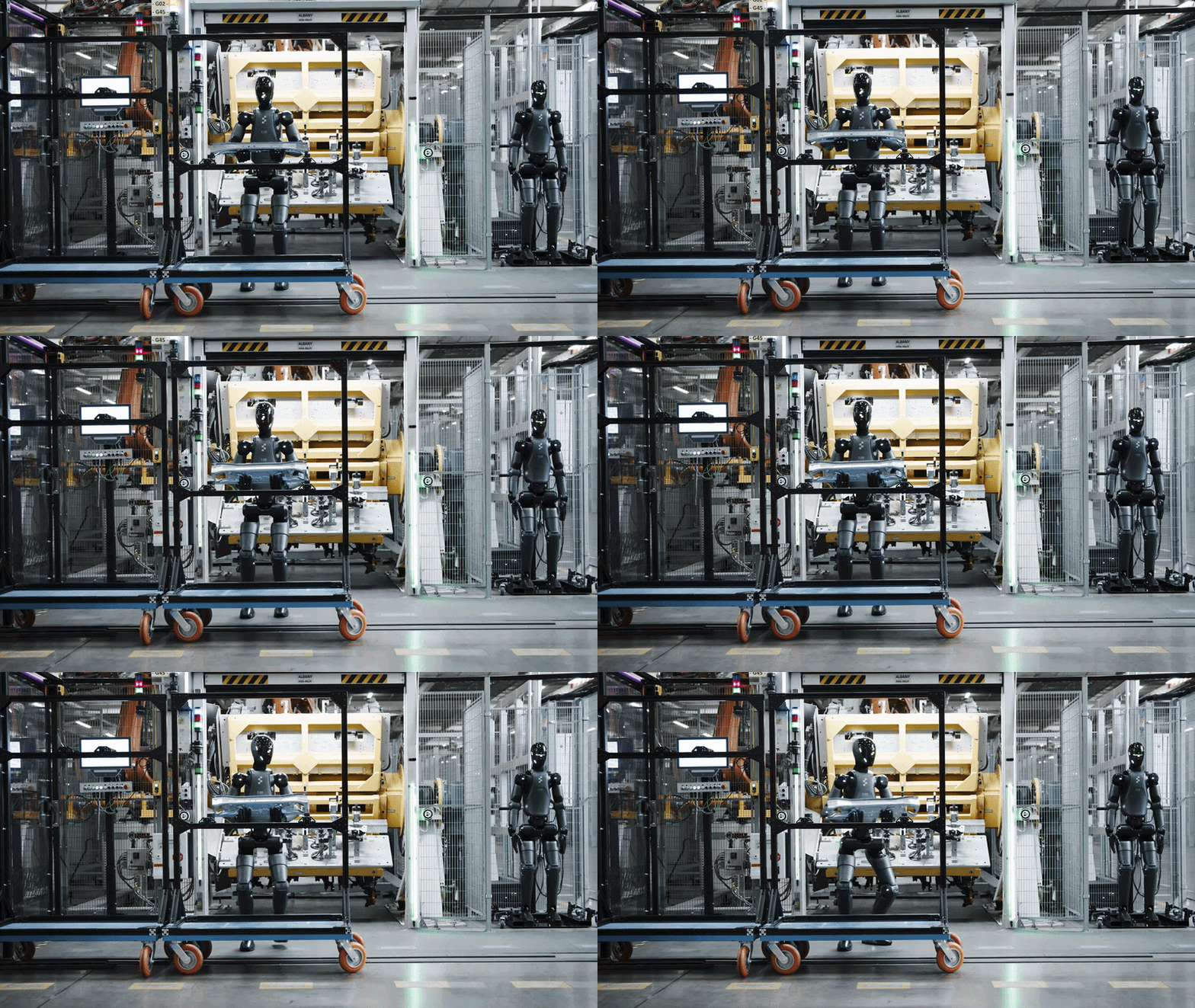
Figure AI`s Humanoid `Figure 02`
Source: Official BMW Group YouTube
Figure 02 operate on the BMW plant floor makes it clear: full-scale humanoid deployment in manufacturing is just around the corner.

Figure AI`s Humanoid `Figure 03`
Source: Official Yonhap News YouTube
Seeing robots outperform humans in parcel-handling tasks proves that the era of 24/7, fully unmanned operations is already upon us.
Boston Dynamics` Humanoid `Atlas`
Source: News1 TV YouTube
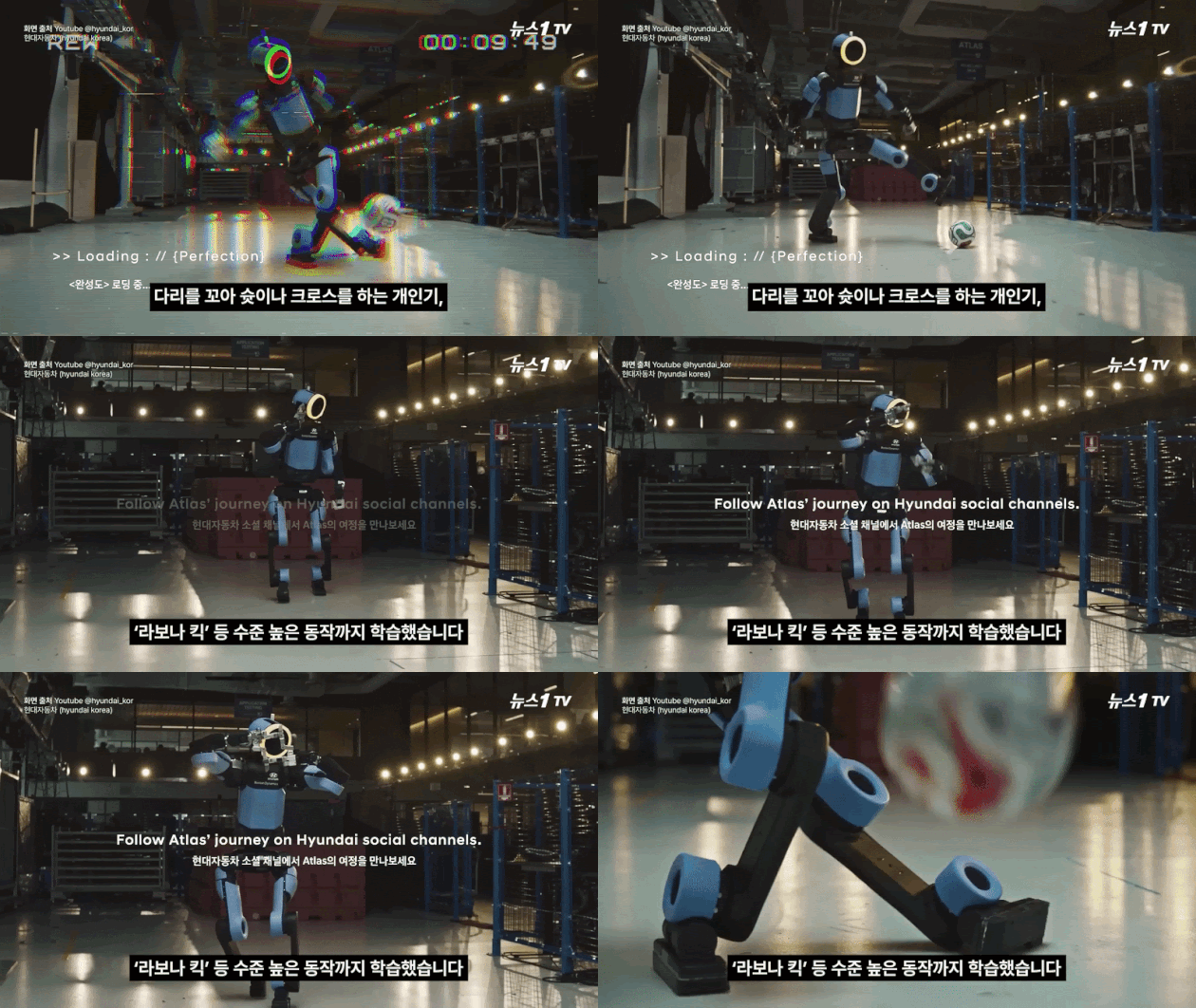
While not a manufacturing or logistics setting, Atlas learning and executing soccer maneuvers demonstrates how rapidly humanoids are mastering complex motor skills beyond simple, repetitive tasks.
Is a completely human-free factory genuinely achievable? Major manufacturing tech giants are championing concepts like Autonomous Manufacturing, Dark Factories, Unmanned Factories, and Software-Defined Factories (SDF), promising a future of flawlessly automated, 24/7 operations. In its Humanoid 100 report, Morgan Stanley projected the broader Physical AI market to reach $60 trillion, alongside rosy forecasts that the industrial robotics market will hit approximately $4 trillion by 2035.
On the ground, however, industry practitioners offer a much more tempered perspective. Many candidly share: "A 100% unmanned factory still feels like science fiction—at least 30 to 50 years away." A sterile, variable-free factory completely devoid of human intervention is not arriving overnight.
Does this mean the billions of dollars global enterprises are pouring into autonomous manufacturing is all built on false promises?
The 5-Stage Roadmap to Autonomous Manufacturing: Where Do We Stand?
The short answer is no. Rather, we are right in the middle of the transition toward unmanned, autonomous manufacturing. Autonomous manufacturing doesn`t happen overnight; it follows a systematic maturity curve. This becomes clear when looking at strategic frameworks from global research firms like Gartner, major tech players, and DAIM Research’s own Autonomous Manufacturing Maturity Model.
■ Stage 1 | Manual & Fragmented Automation
Humans operate machinery, or stationary robots perform repetitive tasks on single, isolated processes.
(Most traditional manufacturing plants)
■ Stage 2 | Connectivity & Visualization
Sensors collect operational data across the facility to monitor plant conditions in real time.
■ Stage 3 | Prediction & Collaboration
AI anticipates equipment failures, and robots actively recognize human safety to collaborate alongside operators.
(★Where global industry leaders are aggressively driving innovation today)
■ Stage 4 | Partial Autonomy
Specific lines or zones run autonomously, with humans shifting into key supervisory roles managing exceptions.
(Near-to-mid-term target)
■ Stage 5 | Full Autonomy & Autonomous Manufacturing
The plant autonomously forecasts demand, optimizes supply chains, and runs 24/7 without human intervention.
(The long-term target state decades away)
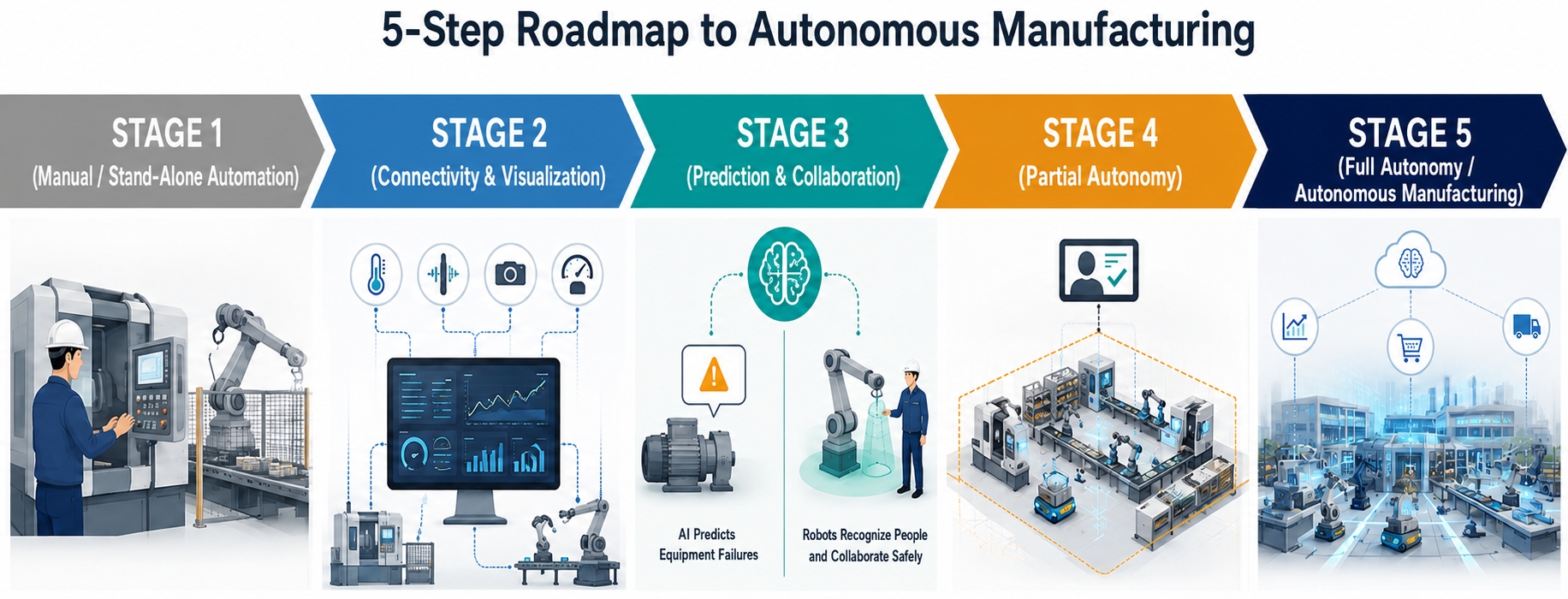
The transformation we are witnessing today sits right between Stage 3 and Stage 4. The goal is not to eliminate human workers immediately, but rather to maximize productivity through human-robot collaboration. Humans evolve into advanced key managers overseeing entire production lines, while AI and robotics handle strenuous, hazardous, and repetitive tasks—maximizing bottom-line profitability and enterprise cost savings.
As this stage matures, it will accelerate the shift toward our ultimate destination: the 24/7 dark factory and fully autonomous operations. (Though candidly, a factory completely devoid of people is a future we might not want to imagine just yet.)
Beyond Unit Processes: Toward the Autonomy of `Flow`
When discussing dark factories or autonomous manufacturing, the first images that come to mind are often high-tech machinery and industrial robotics. Sleek robotic arms welding, machining, and assembling parts have long been the hallmark of factory automation.
A closer look at the shop floor, however, reveals a different reality.
Unit-process automation is now a baseline capability that many manufacturers have already mastered. Today, factory-wide productivity is defined not by how well an isolated piece of equipment performs, but by how seamlessly interconnected those machines are from end to end.
In fact, line stoppages and operational bottlenecks rarely stem from a lack of equipment capability. They happen when the flow of parts and raw materials between processes breaks down, disrupting the entire production line.
Think of production equipment as individual organs in the human body. No matter how healthy the heart, lungs, or stomach may be, the body cannot function if blood fails to circulate.
The same principle applies to manufacturing.
Mobile robots—such as AGVs, AMRs, and OHTs—act as the facility`s circulatory system, linking production machines and delivering parts just in time. Even with the most advanced, high-cost machinery in place, if parts fail to arrive on schedule, production stalls, and overall plant productivity drops sharply.
Does this mean simply deploying more mobile robots will make a plant run more efficiently?
Unfortunately, real-world operations tell a different story.
Many manufacturing and logistics leaders eagerly deploy dozens or hundreds of advanced mobile robots to keep pace with industry trends, only to hit a massive roadblock. Instead of streamlining operations, adding more hardware often leads to traffic snarls and gridlock—a phenomenon known as the "Paradox of Hardware-Centric Automation."
■ Mobile Robot Deadlock
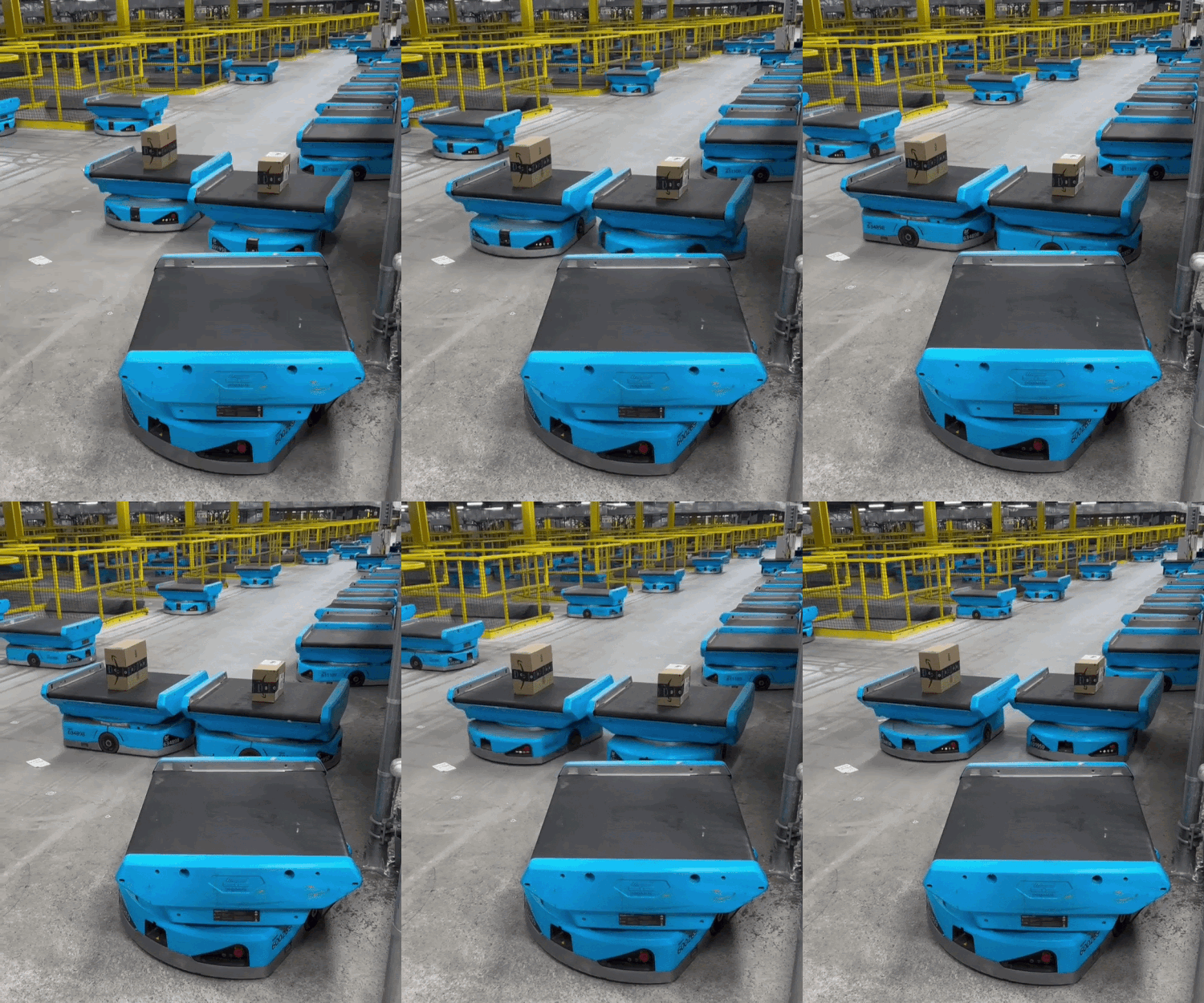
While the market is expanding rapidly, a strange paradox persists on the shop floor: as automation scales up, operations grow more complex, creating new bottlenecks and inefficiencies. Starting in our next issues, we will explore the massive shifts across the industry and take a candid, in-depth look at the hidden limits of hardware-centric automation—as well as practical ways to clear these operational roadblocks.
In Part 3, we will dive into the sheer scale of this market, demonstrating that this transformation is no longer a distant concept, while uncovering the core technologies driving this unprecedented growth.
The lighthearted thought of having a robot clock in for you is becoming reality faster than you might think. Let’s explore where that journey begins.
2026.08.27
DAIM Focus
 DAIM logo_2ab24.png)
 다큐인사이트_4ce7c.jpg)


 기업간담회_11764.jpg)
 mou_b3967.jpg)